

Seen from the heavens, Mount Taranaki is an inverse bomb crater. Instead of a smouldering hole at ground zero surrounded by a graduated ring of devastation, Mount Taranaki is a colossal peak covered in thick life, with mankind’s eradication of nature ring-fenced by a perfect circle surrounding the summit.
On one side of this circumference, drawn with a compass in 1881 at a radius of six miles, New Zealand’s endless green pastures begin. On the other side, a rainforest that has been growing in on itself since the beginning of time.
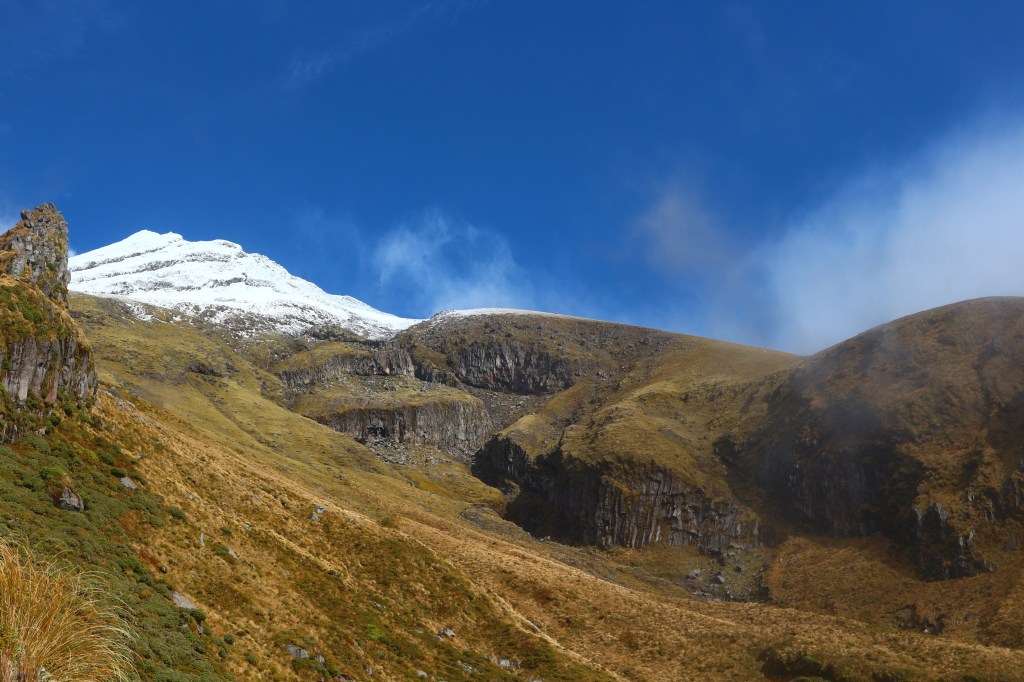
The ancient forests of Mount Taranaki
Passing this boundary between the Anthropocene and the pre-human Earth, you are immediately transported back millennia through time, 130 000 years into a dark forest that would have expanded across the entire Taranaki plains. In these lower slopes, a tree called the Kamahi dominates, its gnarled trunks and branches home for layers of mosses, lichens and ferns. Racing through the understory in a storm, the branches of the Kamahi flail in terror, threatening to snap and crush the solitary walker.

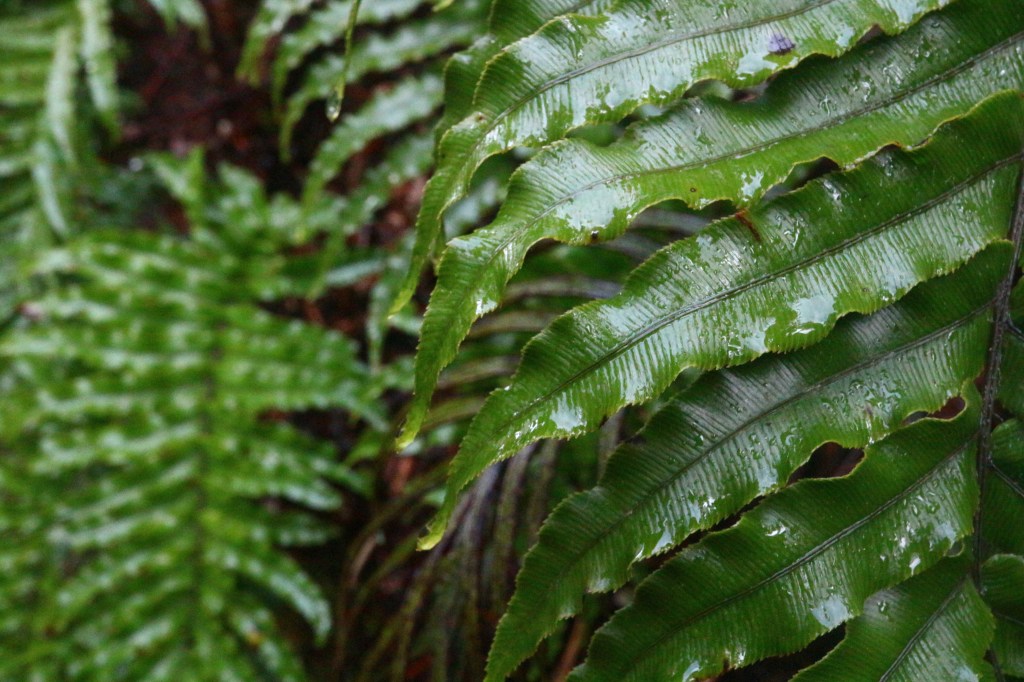
Above left: the Kamahi tree dominates the lower reaches of Mount Taranaki’s north-east face.
Higher up on the mountainside, the forest gives way to stunted shrubs and mosses amongst tall mountain cedar, and the icy peak becomes visible in brief clearings of the thick cloud that permanently sits on Mount Taranaki. The cloud releases anywhere from 2,500mm to 7,000 mm every year onto the mountainsides, inevitably drenching any ‘tramper’ struggling across the rocky slopes.
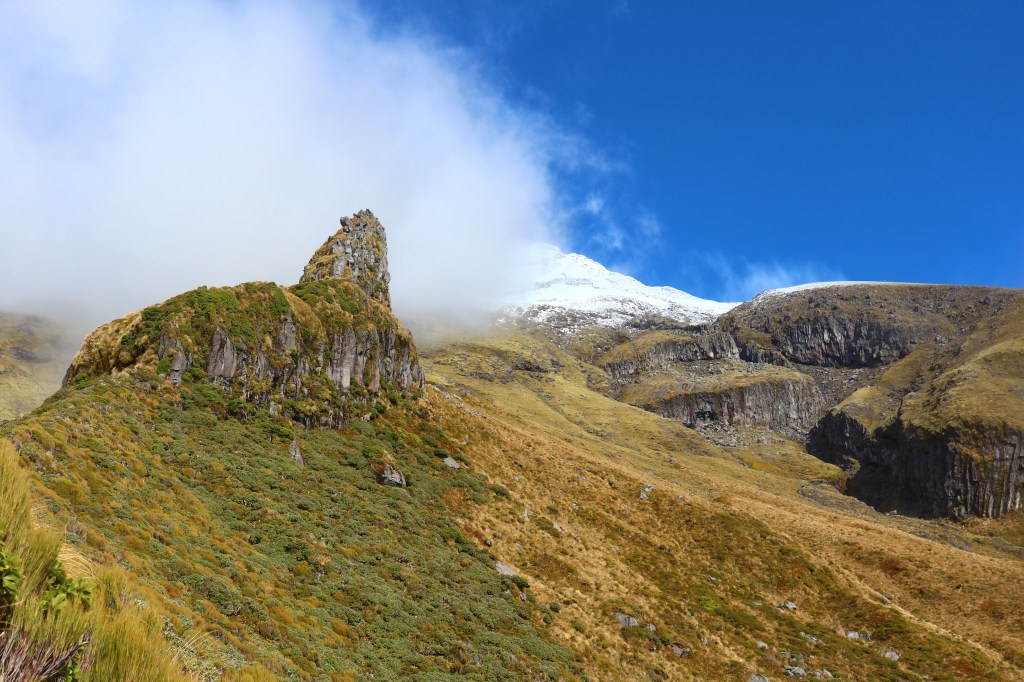

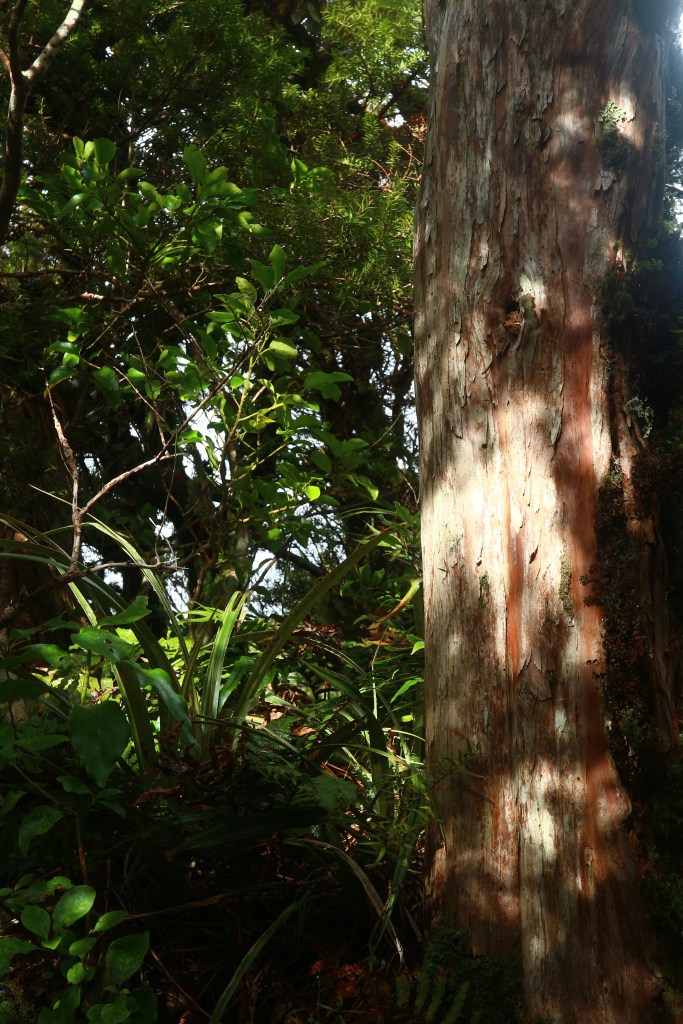
Above right: a Mountain Cedar grows on the NE face of Taranaki.
The living, breathing Mount Taranaki
Walking Taranaki, you can come closer to grasping Indigenous conceptions of nature as sentient. Maori mythology tells the story of chief Taranaki, a warrior-mountain enamoured by a verdant female mountain, Pihanga. Taranaki made his move, but was challenged and defeated in battle by the mighty Tongariro, who also loved Pihanga. Retreating west towards the sea, Taranaki carved out the Whanganui River on his way, and found a new love, the Pouākai range, just to his north. Settling next to each other, Pouākai and Taranaki gave birth to the life and rivers flowing from their slopes.
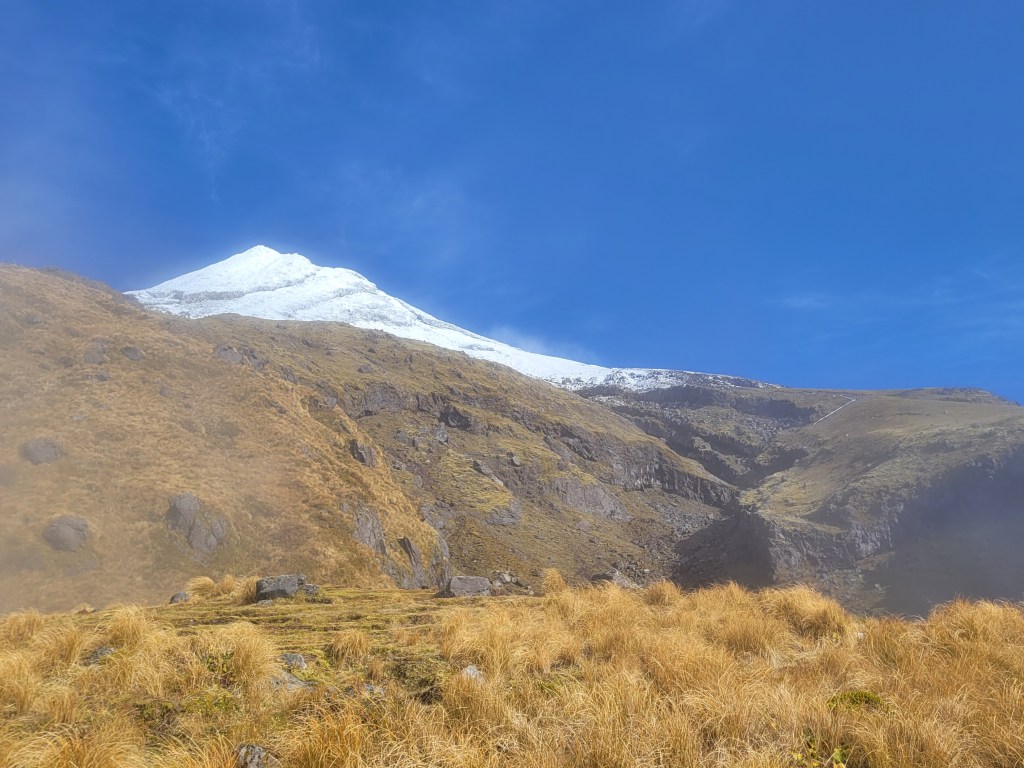

Today, New Zealand law recognises that Taranaki is alive. The descendents of the mountain chief, the Taranaki iwi (or tribe), have negotiated an agreement with the New Zealand government that grants legal personhood to the mountain, endowing Taranaki with legal rights to go to court, own property, enter into contracts, and advocate for itself. Similarly to corporate personhood, the mountain’s interests will be represented by a board of guardians appointed by the Crown and the iwi. With its storms and downpours, its streams and swamps, with its thick coat of green life, with its ancient ecosystems and its volcanic, changing landscape, all interlaced, Taranaki is an expression of Gaia, who we are only now, slowly, coming to recognise, just as the Maori had long ago, as the living Earth.


 Lives and Times